
4 innovations durables tout droit sorties de la science-fiction
Ces quatre technologies ont des airs de science-fiction pourtant, elles sont bien réelles et redessinent déjà notre rapport à l'énergie et a...
En savoir plusL’économie mondiale entre dans une nouvelle ère décisive où la performance Environnementale, Sociale et de Gouvernance (ESG) n’est plus un choix stratégique pour les entreprises, mais une condition indispensable pour rester dans la course. À l’approche de 2026, un changement fondamental s’est opéré : l’ESG est passé d’un simple discours de marque à une véritable condition d’accès aux marchés.

Le principal moteur de cette transformation est l’intégration totale des critères ESG dans l’investissement institutionnel. D’ici fin 2026, les investissements institutionnels axés sur l’ESG devraient atteindre 33,9 trillions de dollars, représentant plus de 21 % des actifs mondiaux sous gestion. Le marché global des investissements liés à l’ESG devrait quant à lui atteindre l’impressionnant montant de 45,6 trillions de dollars cette année.
Concrètement, cela signifie que le capital n’est plus neutre face aux données de durabilité. L’ESG est passé d’un outil de “positionnement” utilisé par les départements marketing à une véritable “logique d’allocation du capital” utilisée par les responsables des risques. Les investisseurs utilisent de plus en plus les données ESG comme filtre principal ; les entreprises incapables de fournir des indicateurs de durabilité crédibles et prêts à être audités sont désormais exclues des circuits de financement avant même d’arriver à la table des négociations.
L’ère du reporting ESG volontaire est terminée. Le nombre de juridictions imposant des obligations de divulgation devrait doubler d’ici 2026. Avec plus de 7 000 lois et politiques liées au climat désormais actives dans le monde, l’ESG est passé de la périphérie de la “responsabilité d’entreprise” au centre de la conformité réglementaire.
Des cadres comme la Corporate Sustainability Reporting Directive (CSRD) de l’Union européenne ainsi que les mécanismes d’ajustement carbone aux frontières signifient que pour toute entreprise impliquée dans le commerce international, l’ESG est désormais une exigence technique. Plus de la moitié des entreprises mondiales considèrent aujourd’hui la réglementation comme le principal moteur de leur stratégie ESG. Il ne s’agit plus seulement de donner une bonne image aux actionnaires, mais bien de répondre aux exigences légales nécessaires pour rester opérationnel sur les marchés mondiaux clés.
Les grands groupes multinationaux sont devenus les acteurs les plus efficaces dans l’application des standards ESG. Les données actuelles montrent que plus de 50 % des émissions des entreprises proviennent des chaînes d’approvisionnement, les émissions Scope 3 celles qui échappent au contrôle direct de l’entreprise représentant entre 70 % et 90 % de l’empreinte carbone totale d’une activité.
Les grands donneurs d’ordre mondiaux, notamment en Europe et en Amérique du Nord, exigent désormais des données détaillées sur les émissions carbone et les conditions de travail de leurs fournisseurs. Si un fournisseur n’est pas capable de fournir des preuves traçables et transparentes de sa performance ESG, il risque une exclusion immédiate des circuits d’approvisionnement. En 2026, l’ESG n’est plus seulement une démarche interne ; c’est une exigence imposée par les clients eux-mêmes.
Nous assistons aujourd’hui à une véritable “grande fracture” entre les entreprises prêtes pour l’ESG et celles progressivement exclues du marché. Près de 60 % des investisseurs privilégient désormais les données conformes aux réglementations dans leurs décisions. Les entreprises disposant de données structurées et d’une gouvernance claire bénéficient d’un accès privilégié à des financements moins coûteux ainsi qu’à des partenariats plus stables. À l’inverse, les entreprises dépourvues de ces structures font face à des processus de due diligence plus longs, des taux d’intérêt plus élevés et un nombre réduit de partenaires internationaux potentiels.
Alors que 90 % des entreprises du S&P 500 publient désormais des rapports ESG, l’attention en 2026 s’est déplacée du “rapport” vers la “donnée”. Historiquement, seulement 20 % des équipes financières suivaient les indicateurs ESG en interne, mais cette réalité évolue rapidement.
Le véritable facteur différenciant sur le marché actuel est désormais la fiabilité des données. Les données ESG sont intégrées à la planification financière, à la modélisation des risques et aux systèmes de rémunération liés à la performance. Les équipes financières participent désormais directement à 74 % des rapports ESG, signe que la durabilité est devenue une composante centrale de l’infrastructure de l’entreprise, et non plus une simple fonction RSE séparée.
Pour des régions comme le Moyen-Orient et l’Afrique, qui devraient gérer plus de 5 trillions de dollars d’actifs liés à l’ESG d’ici 2026, cette transition représente à la fois une menace et une immense opportunité. Le risque est clair : les entreprises qui ignorent cette évolution risquent d’être exclues des chaînes de valeur mondiales.
Cependant, une véritable opportunité stratégique de “leapfrog” existe. En adoptant tôt des modèles ESG structurés, les entreprises des marchés émergents peuvent se positionner comme partenaires privilégiés des acteurs internationaux recherchant des fournisseurs fiables et à faible empreinte carbone.
En 2026, le leadership ne consiste plus à se demander si une entreprise possède une stratégie ESG. La véritable question est de savoir si l’entreprise reste éligible à la compétition dans un marché mondial où les règles du jeu ont été définitivement redéfinies. L’ESG n’est plus le “futur” du business ; il constitue désormais l’infrastructure actuelle de l’économie mondiale.
Ces quatre technologies ont des airs de science-fiction pourtant, elles sont bien réelles et redessinent déjà notre rapport à l'énergie et a...
En savoir plus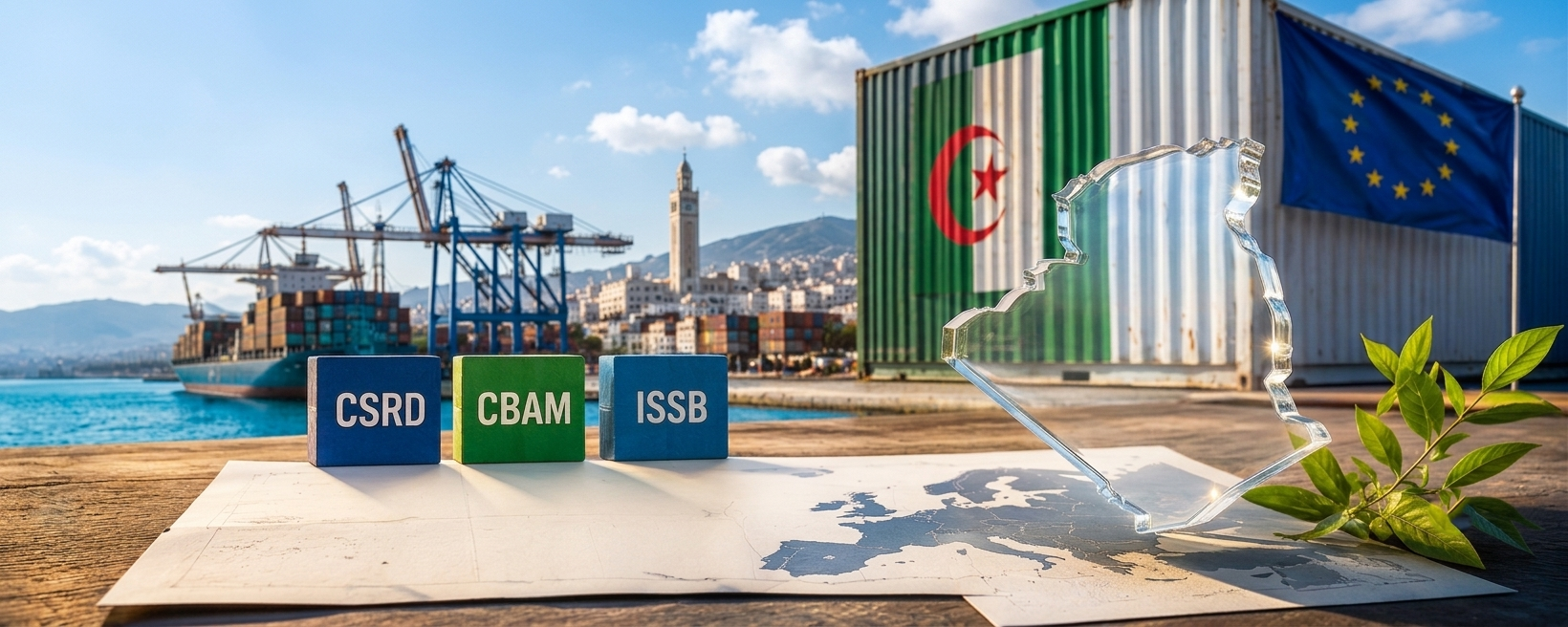
CSRD, CBAM, ISSB… Ces réglementations et référentiels ESG internationaux redéfinissent progressivement les règles du commerce mondial. Pourq...
En savoir plus
La COSOB franchit une nouvelle étape dans la modernisation du marché financier algérien en rendant obligatoire le reporting ESG pour les soc...
En savoir plus